7MPopulation
75yearsLife Expectancy
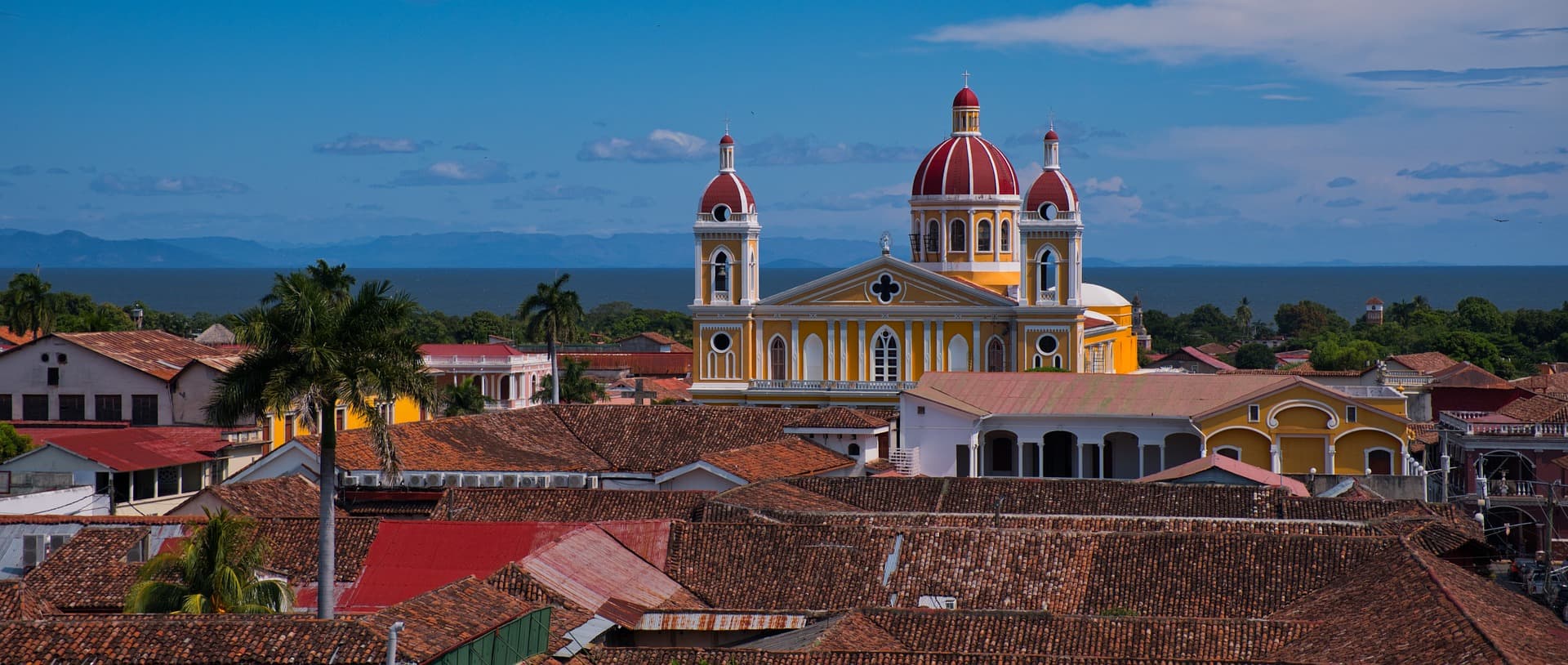

The Republic of Nicaragua, in Central America, between the Pacific Ocean and the Caribbean Sea, is bordered by Honduras to the northwest, the Caribbean to the east, Costa Rica to the south, and the Pacific Ocean to the southwest. Known for its dramatic terrain of lakes, volcanoes, and beaches, the country has a population of a little over 6.2 million people, with 74 percent age 15 and above. Nicaragua has a multiracial population comprising Africans, indigenous Europeans, and people of Asian heritage. Spanish is the official language. Managua is the country’s largest city and capital. Nicaragua’s constitution guarantees and promotes religious freedom and tolerance. Though Christianity is the dominant religion, the country has no official religion.
The Republic of Nicaragua gained independence from Spain in 1821 and subsequently became an autonomous territory in 1860. Since independence, the country has faced the challenges of political instability, dictatorship, occupation, fiscal crises, riots such as the Nicaraguan Revolution of the 1960s and 1970s, and the Contra war of the 1980s. Nicaragua has one of the most constricted and challenged economies in the Americas. According to the United Nations Development Programme, 48 percent of the Nicaraguan population lives below the poverty line, with 79.9 percent living on less than $2 per day. With poverty and under-employment on the rise, Nicaragua remains the poorest country in Central America.
The Nicaraguan population faces many challenges as a result of pervasive poverty and lacking economic development, including challenges in health. Life expectancy in Nicaragua is 74 years. Despite some improvements in health indicators, the main contributors to death in the country are predominantly non-communicable diseases, including ischemic heart disease, chronic kidney disease, stroke, diabetes, cirrhosis, COPD, Alzheimer’s disease, hypertensive heart disease, and congenital defects. Additionally, lower respiratory infections, road injuries, and neonatal disorders are significant causes of death.